Mastering the Wreath Brush: A Practical Guide to Digital Design Integration
In the fast-paced world of digital content creation, efficiency is not just a luxury; it is a necessity. Whether you are a freelance graphic designer, a small business owner managing your own marketing materials, or a hobbyist looking to elevate your personal projects, the tools you choose define the quality and speed of your output. One such tool that has gained significant traction for its versatility and aesthetic appeal is the Wreath Brush. This digital asset is more than just a simple stamp; it is a workflow accelerator designed to bring organic, hand-drawn elegance to your compositions without the hours traditionally required for illustration.
Understanding how to effectively integrate a Wreath Brush into your existing creative process requires a shift in perspective. Instead of viewing it merely as a decorative element, consider it a foundational component of your design system. When used correctly, it streamlines the transition from concept to final render, ensuring consistency across branding, social media graphics, and print materials. This article explores the practical implementation of the Wreath Brush, detailing how it fits into broader project workflows, interacts with other digital assets, and enhances overall production quality.
Defining the Wreath Brush in a Professional Context
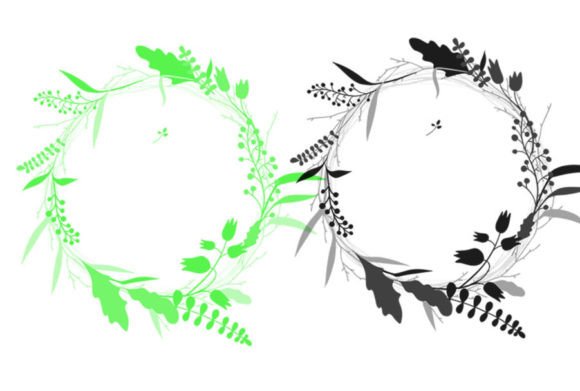
A Wreath Brush is typically a custom brush preset compatible with major digital painting and design software such as Adobe Photoshop, Procreate, or Clip Studio Paint. Unlike standard geometric shapes, this brush mimics the irregular, natural flow of foliage, flowers, and vines arranged in a circular or semi-circular pattern. The primary value proposition here is authenticity. Hand-drawing a balanced wreath requires a steady hand, an eye for composition, and significant time. A high-quality Wreath Brush replicates this organic imperfection instantly, allowing creators to focus on layout, typography, and color theory rather than tedious line work.
For professionals, this means the difference between spending twenty minutes sketching a frame and spending twenty seconds placing one. For entrepreneurs and marketers, it means maintaining a cohesive visual identity across multiple platforms without needing to hire an illustrator for every minor update. The brush serves as a bridge between raw creativity and polished execution, making high-end design accessible to users with varying levels of technical skill.
Strategic Placement in Your Creative Workflow
To maximize the utility of the Wreath Brush, it is essential to understand where it fits within the lifecycle of a project. Its application varies depending on whether you are in the planning, execution, or refinement phase.
Pre-Production and Conceptualization
During the initial stages of a project, speed is crucial. You need to visualize ideas quickly to present them to clients or stakeholders. Here, the Wreath Brush acts as a rapid prototyping tool. Instead of using placeholder boxes for decorative elements, you can drop in a wreath to establish the mood and framing of the design immediately. This helps in assessing balance and negative space early on, preventing costly revisions later in the process. By integrating the brush at this stage, you ensure that the decorative elements are not afterthoughts but integral parts of the composition.
Execution and Assembly
This is the core phase where the Wreath Brush delivers the most tangible benefits. When building social media posts, wedding invitations, or product packaging, consistency is key. Using a single, high-quality brush ensures that every wreath element shares the same stylistic DNA—line weight, texture, and opacity. This uniformity is vital for brand recognition. Furthermore, because the brush is digital, it offers infinite scalability and rotatability. You can adjust the size and orientation to fit any canvas dimension without losing resolution, a significant advantage over static PNG stock images.
Post-Production and Refinement
Even after the main design is assembled, the Wreath Brush can be used for subtle enhancements. You might use it to soften harsh edges, add depth through layering, or create custom masks for text. By lowering the opacity or changing the blending mode, the wreath can serve as a textured background element rather than a foreground focal point. This flexibility allows for nuanced adjustments that elevate the perceived quality of the final piece.
Technical Implementation and File Compatibility
When you acquire a professional-grade Wreath Brush, you are typically downloading a ZIP file containing specific file formats such as .brushes or .swatches. Understanding these formats is critical for smooth integration into your software ecosystem.
- .brushes files: These are native preset files for applications like Adobe Photoshop. Installing them usually involves a simple import process via the brush panel. Once loaded, they behave like any other native tool, responding to pressure sensitivity if you are using a tablet. This responsiveness is crucial for achieving natural-looking variations in line thickness.
- .swatches files: While less common for shape brushes, swatches may accompany the set to provide pre-configured color palettes that complement the wreath’s aesthetic. Utilizing these ensures that your color choices remain harmonious with the brush’s intended style, reducing decision fatigue during the design process.
It is important to verify software compatibility before purchase. Most modern design tools support standard brush formats, but legacy versions may require updates. Ensuring your software is current prevents technical hurdles that can disrupt your workflow. Additionally, organizing your brush library is a best practice often overlooked. Create dedicated folders for seasonal or thematic brushes. This organizational habit saves valuable time when searching for the right asset under tight deadlines.
Enhancing Quality Control and Consistency
One of the challenges of using digital brushes is avoiding a "cookie-cutter" look. If every wreath looks identical, the design can feel stale. To counter this, experienced designers employ several techniques to maintain uniqueness while leveraging the efficiency of the Wreath Brush.
First, vary the pressure and speed of your stroke. Even with a preset, the input method affects the output. A quick, light stroke will differ significantly from a slow, heavy one. Second, utilize layer effects. Adding subtle drop shadows, inner glows, or color overlays can drastically change the appearance of the same base brush stroke. Third, combine the Wreath Brush with other elements. Overlaying texture maps or combining it with hand-lettered typography creates a composite image that feels bespoke rather than automated.
Quality control also involves checking resolution. Ensure that the brush settings are optimized for your output medium. For web graphics, standard resolution suffices, but for print materials, you must ensure the brush dynamics do not introduce pixelation or unwanted artifacts. Testing prints on different paper stocks can reveal how the digital brush translates to physical media, allowing for necessary adjustments in ink density or contrast.
Long-Term Value and ROI for Creators
Investing in a specialized tool like the Wreath Brush should be viewed through the lens of long-term return on investment (ROI). The initial cost is negligible compared to the hours saved over months of use. For freelancers, this time savings translates directly into increased capacity to take on more clients or dedicate more time to high-value tasks like strategy and client communication. For businesses, it reduces dependency on external designers for minor updates, empowering internal teams to maintain agility.
Moreover, mastering a specific tool builds expertise. As you become familiar with the nuances of the Wreath Brush, you develop a signature style. This distinctiveness can become a part of your personal or brand identity, setting you apart in a saturated market. The ability to produce consistent, high-quality visuals quickly is a competitive advantage that pays dividends over time.
Conclusion
The Wreath Brush is more than a digital shortcut; it is a strategic asset for modern creators. By understanding its role in your workflow, from conceptualization to final refinement, you can unlock new levels of efficiency and creativity. Proper installation, organized management, and thoughtful application ensure that this tool enhances rather than hinders your process. Whether you are designing for print, web, or social media, integrating the Wreath Brush allows you to deliver professional, polished results with greater speed and consistency. Embrace the tool, refine your technique, and let it streamline your path from idea to execution.